
From Uncertainty to Abundance — how one farmer in Ongaro Village, Ndhiwa, swapped maize for cane, built a 10-acre business, and became a voice for women in agriculture across Homa Bay County.
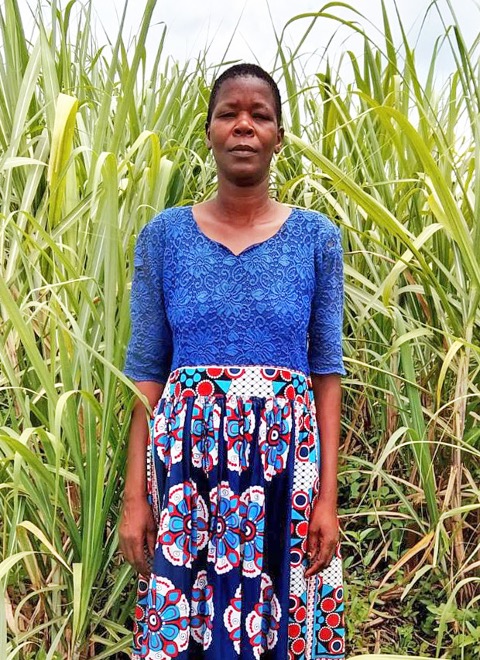
Millicent Akinyi was 31 years old when she decided enough was enough. Year after year, the maize and groundnut harvests had delivered the same cycle: promise, uncertainty, and disappointment. Rain failure, price collapse, poor yields — the variables changed but the outcome repeated itself until the pattern became impossible to ignore or accept.
Looking around her in Ongaro Village, she saw something different growing in the neighbouring fields — sugarcane, and the relative stability it brought to families who farmed it seriously. She knew Sukari Industries was buying cane. She knew the returns, under disciplined management, were predictable. What she needed was the courage to commit to a complete change of direction.
In 2015, she ploughed her first field and planted her first ratoons. It was not simply a farming decision. It was a declaration — that she would no longer leave her family’s welfare to the mercy of unpredictable short-season crops.
I was tired of hoping for a good harvest and always being disappointed. I needed something I could plan around, something that would not let me down. That is why I chose cane.
— Millicent Akinyi, Sugarcane Farmer, Ongaro Village
Building the Farm, Building the Future
Millicent did not arrive at 10 acres overnight. The expansion was deliberate and disciplined — each harvest reinvested into the next cycle, each ratoon managed with care, each input applied on schedule.
She applied herself to understanding what the crop required: proper spacing, timely weeding, fertiliser at planting and top-dressing, consistent field monitoring. Where other farmers cut corners or delayed inputs, Millicent held firm. She sought guidance from extension staff, observed experienced growers, and treated every agronomic decision as a business investment — because that is precisely what it was.
“The cane does not lie,” she says plainly. “If you take care of it, it takes care of you. If you neglect it, it shows. My farm is a reflection of how I work.”
By the time her farm reached 10 acres under full cultivation, Millicent had transformed what began as a desperate crop switch into a structured agricultural enterprise. The farm was no longer just a livelihood — it was a platform from which to build something lasting.
What the Harvest Pays For
Ask Millicent what she does with her cane income and she answers without hesitation: school fees.
Her four children are the purpose behind every agronomic decision she makes. Three are enrolled in secondary school. One has already progressed to higher learning — a milestone Millicent speaks of with quiet, unmistakable pride.
“My children are why I wake up and go to the farm. When I pay school fees, I am not just paying for this term. I am investing in their future — in the kind of life I did not have access to. That is what the cane is really growing.”
Beyond education, the income covers food, clothing, household needs, and gradual improvements to her home. The family no longer lives season to season, hoping each harvest will be sufficient. There is predictability now — and with it, the ability to plan.
The Role of Sukari Industries
Millicent is specific about what the partnership with Sukari Industries has meant in practical terms. Chief among her appreciation is prompt payment after cane delivery.
In sugarcane farming, payment timing is not a minor administrative detail — it is the difference between a farmer who can plan and one who cannot. When payments arrive reliably, school fees are paid on time. When inputs can be purchased without delay, the next ratoon is managed correctly. The entire system of financial planning Millicent has built rests on the reliability of that payment relationship.
“Sukari pays on time. That is not a small thing. That is everything. When I deliver my cane, I know the money is coming. I can already plan what to do with it. That kind of reliability changes how you farm and how you live.”
A Voice for Women in Agriculture
Millicent has become more than a successful farmer. She has become a model — particularly for women in her community weighing whether to enter or expand sugarcane farming.
Her message is consistent: dedication and proper management are the foundations of success, not gender. She pushes back firmly against the assumption that large-scale farming is not a woman’s domain, drawing on her own 10 acres as daily evidence to the contrary.
Women who once dismissed cane farming as too demanding are now visiting her farm, asking about registration with Sukari, input sourcing, and field management. Her story has done what no pamphlet or seminar could — it has made the possibility visible and believable.
“Do not be afraid of the work,” she tells the women who seek her advice. “The cane requires effort, yes. But so does everything worth having. If you manage it properly, it will pay you properly. It has never failed me.”
When a woman sees my farm and knows it is mine — that I built it, that it feeds my children and pays their school fees — she begins to think: if Millicent can do this, perhaps I can too. That thought is powerful. It changes everything.
— Millicent Akinyi