
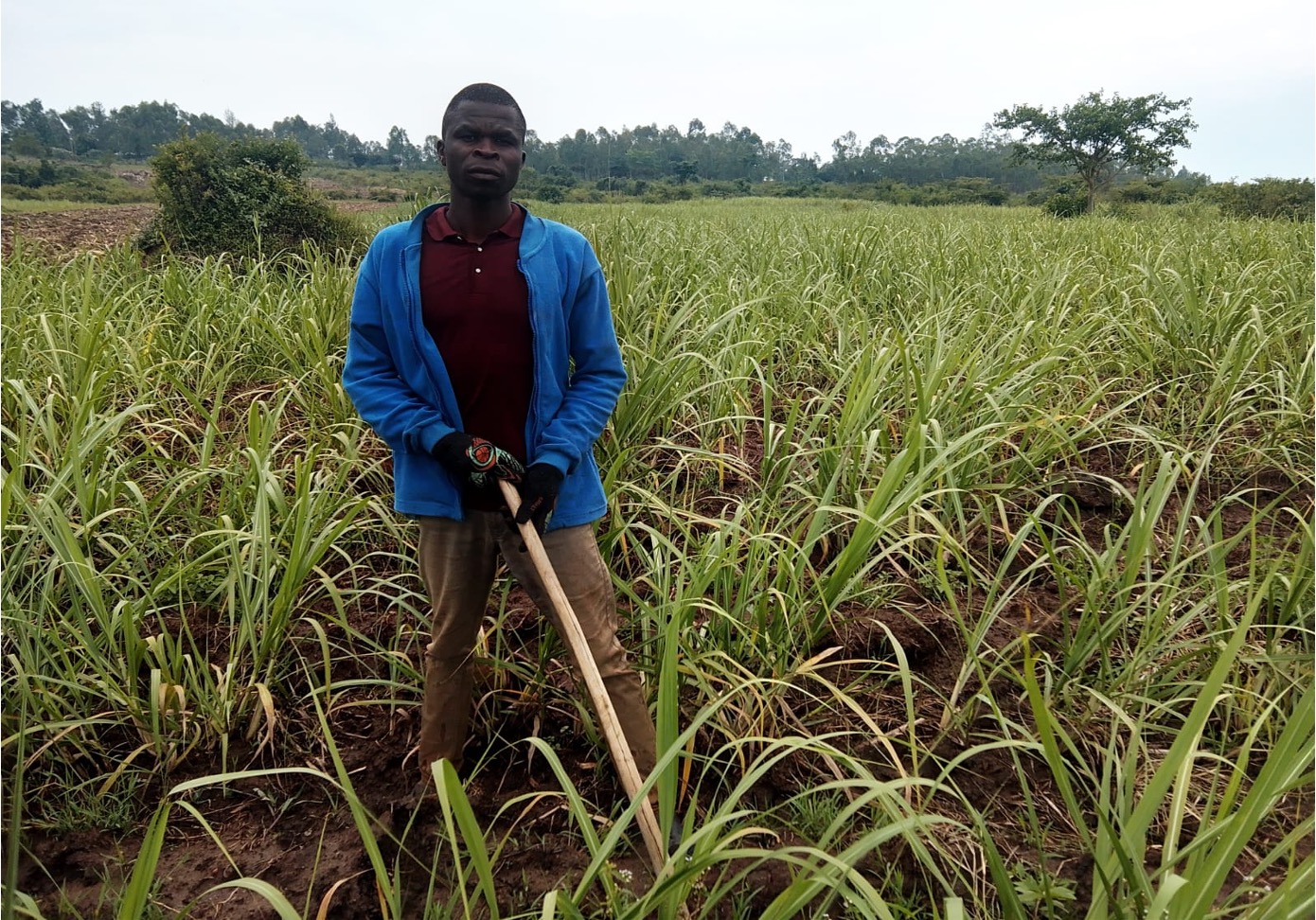
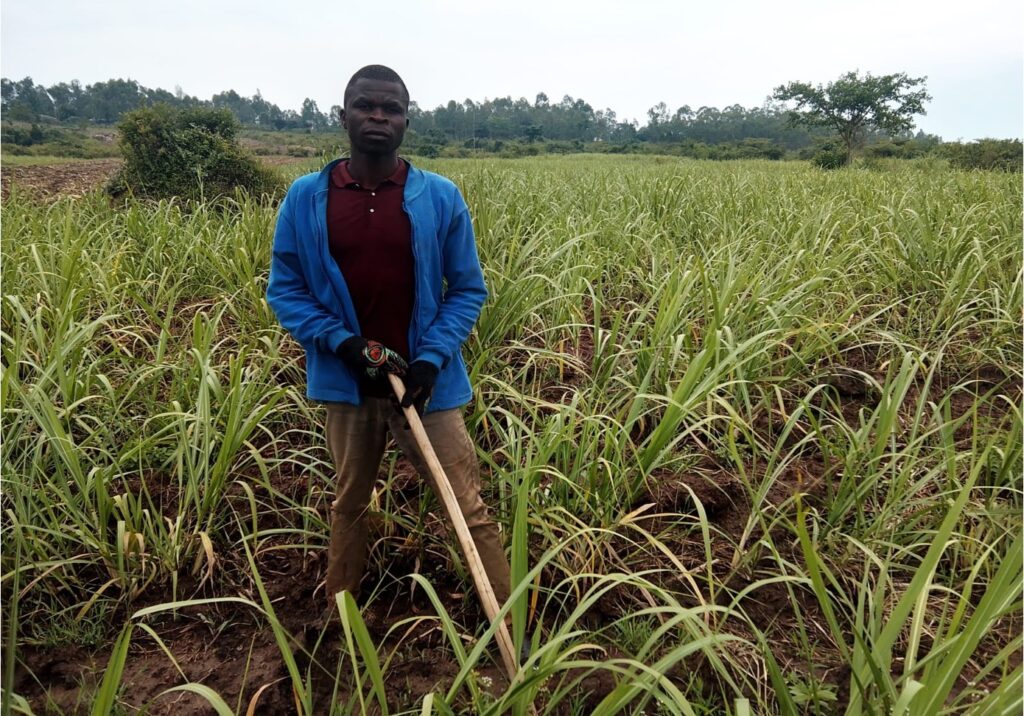
Mike Otieno Odeka
At a glance: At 25, Mike Otieno Odeka belongs to a demographic particularly vulnerable to unemployment and urban migration. His deliberate choice to invest in agriculture challenges prevailing perceptions — and provides a model for rural youth across South Kabura.
In Kamasi Village, South Kabura, the pressures on young people are familiar and intense. Formal job opportunities are scarce. The prevailing perception, reinforced by generations, holds that farming is a last resort — what you do when nothing else works. For many rural youth, the path of least resistance leads to urban migration, searching for short-term income that rarely materialises sustainably.
Mike Otieno Odeka, 25 and unmarried, grew up surrounded by these messages. He watched peers leave for towns, seeking work that often proved temporary and precarious. He observed the cycle of underemployment that trapped young people who neither migrated nor found local opportunities.
And he made a different choice.
“Everyone told me farming is for old people, for those who failed in school, for those with no ambition,” Mike recalls. “I looked at the farmers around me and saw something else. I saw people with land, with crops, with income. I asked myself: why should that not be me?”
Farming as Business, Not Last Resort
In 2023, Mike dedicated 3.5 acres of land to sugarcane cultivation. But he did not approach farming casually. He committed to professional management — timely land preparation, proper weeding, fertiliser application, strict adherence to recommended agronomic guidelines.
“I decided early that my farm would be a business, not a garden,” he explains. “Business means records. Business means following instructions. Business means reinvesting profits, not spending everything. Business means planning for next season while this season is still growing.”
This disciplined approach set Mike apart from peers who viewed farming as temporary or inferior. He attended farmer trainings, sought advice from Sukari Industries field officers, and networked with experienced growers. His 3.5 acres became a laboratory for proving that youth and agriculture are compatible.
Measured Success, Visible Results
Today, Mike’s farm provides him with a reliable income stream. At an age when many peers lack economic independence, he saves, reinvests, and plans. His goals extend beyond current acreage — he intends to scale up over time and diversify into broader agribusiness ventures.
“The money from cane is not quick money,” he notes. “You wait months before harvesting. But when it comes, it comes in amounts that matter. You can do things with cane money — pay school fees for siblings, buy additional land, invest in livestock. Quick money from casual work disappears. Cane money builds.”
Mike’s success has not gone unnoticed. Young people in Kamasi Village and wider South Kabura are taking notice. A 25-year-old managing productive farmland challenges entrenched stereotypes. If Mike can farm profitably, perhaps farming deserves reconsideration.
“Some young people now ask me questions,” he says. “How did you start? How do you access inputs? What does Sukari provide? These questions did not come before. Young people assumed farming was not for them. Now they see it differently.”
Disrupting Negative Perceptions
Mike’s story disrupts the narrative that rural youth must choose between idleness and migration. It demonstrates that with vision, patience, and proper management, agriculture can serve as a powerful foundation for independence and long-term prosperity.
His countercultural choice carries significance beyond personal success. Each young person who sees farming as viable reduces pressure on urban job markets. Each young farmer who succeeds creates a visible alternative for peers. The ripple effects extend through communities, gradually shifting perceptions that have constrained rural youth for generations.
“Farming is not easy,” Mike acknowledges. “But what worthwhile work is easy? The difference is that farming is here. The land is here. The company is here. The market is here. Everything I need to build a future is within walking distance. Why would I leave that to look for something uncertain somewhere else?”
A Foundation for the Future
Mike Otieno Odeka’s 3.5 acres represent more than sugarcane. They represent a deliberate choice to build rather than wait, to invest rather than migrate, to prove rather than accept.
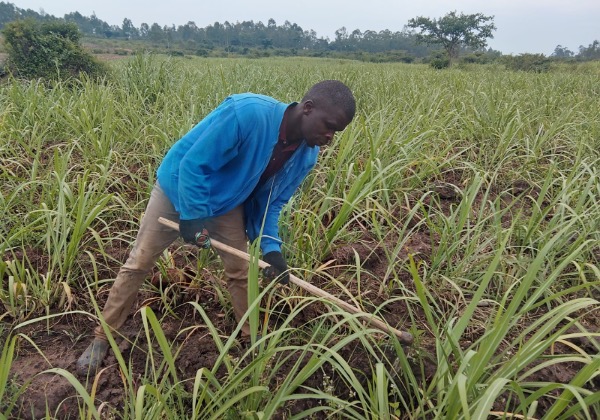
Standing in his well-maintained fields, weeding alongside workers he employs, Mike embodies a different possibility for rural youth. Not everyone must leave. Not everyone must wait for formal employment. Agriculture, properly approached, can provide.
“When my cane is harvested and payment comes, I feel something I cannot describe,” he reflects. “Not just the money. The satisfaction of choosing my own path. The knowledge that I built this myself. The proof that young people can farm and succeed.”